
Barry University has always built around improving the student experience, and its integrated student success model gives every student a CASA coach. But answering a single academic question could mean pulling from the student information system, course catalogs, degree requirements, transfer evaluations, and the institutional knowledge that lives in people's heads. Coaches ended up spending appointment time confirming where a student stood when they could have been coaching.
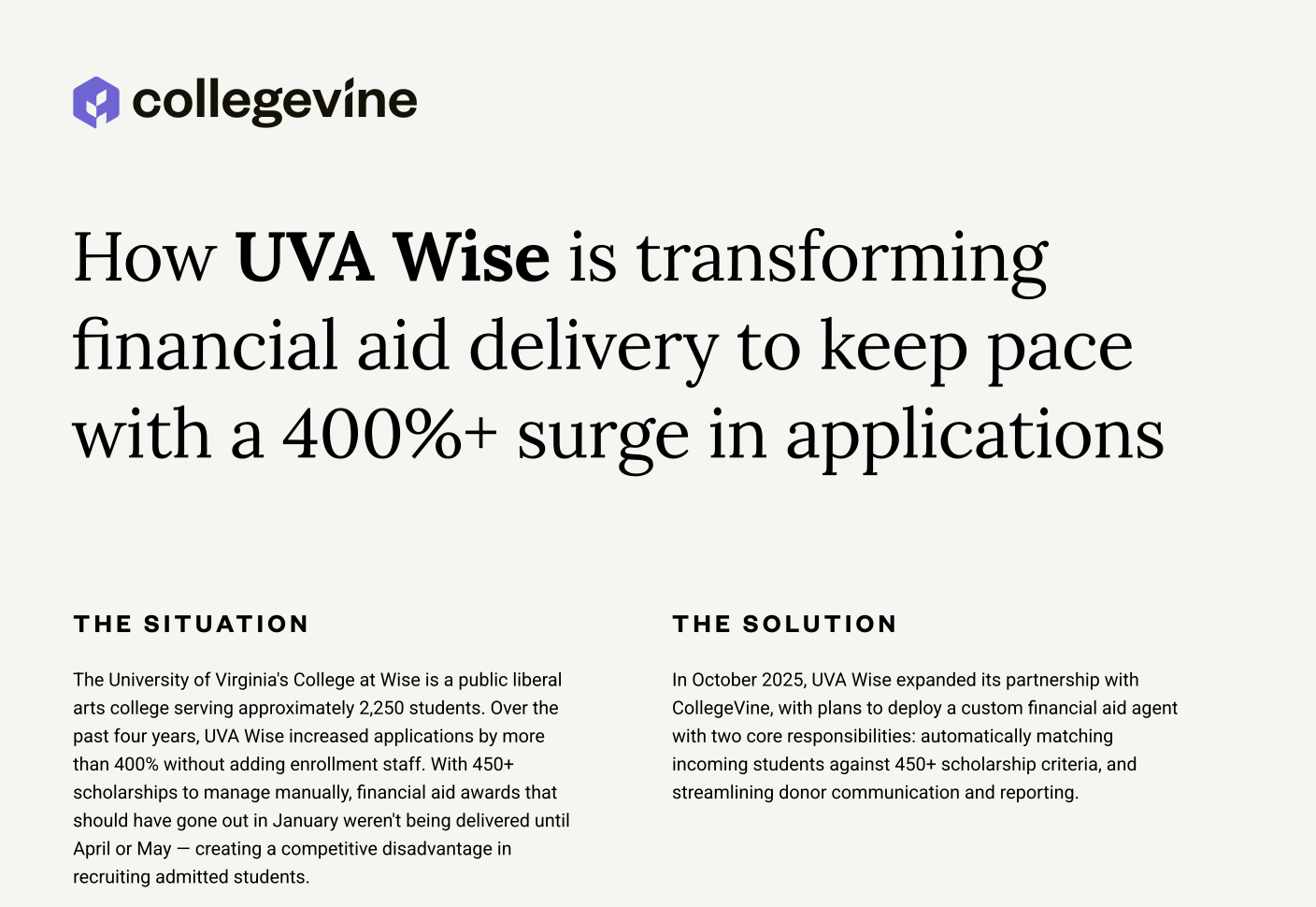
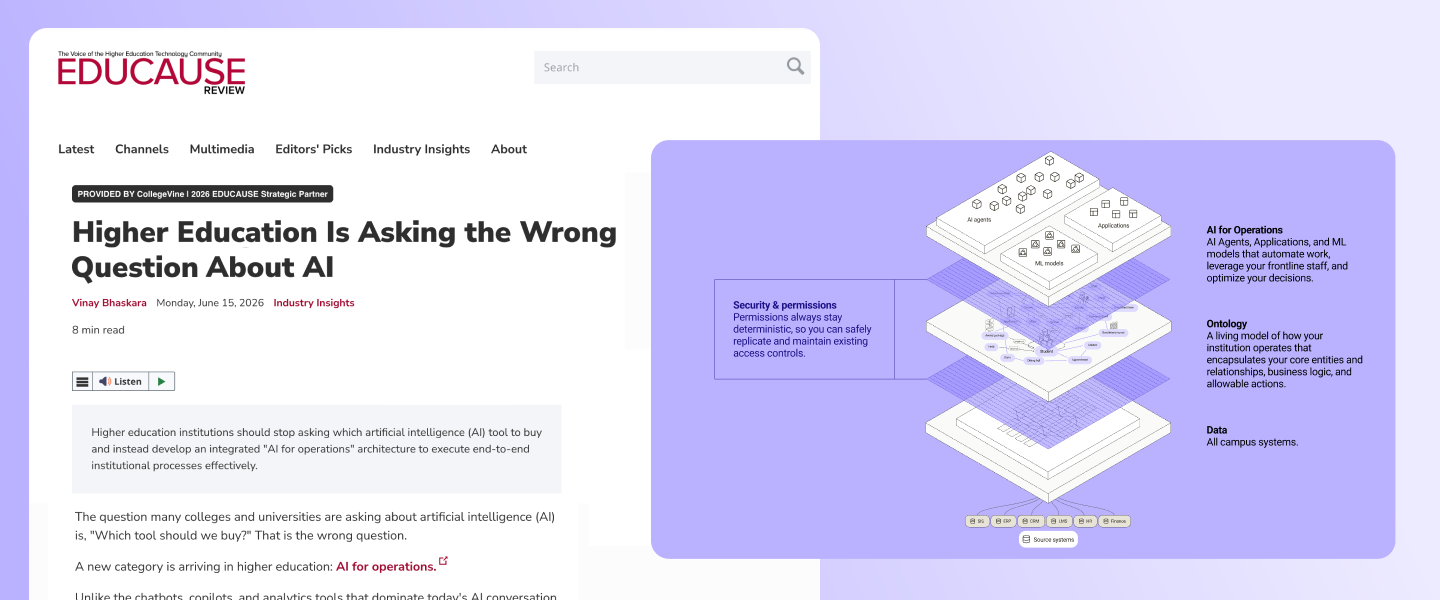
Barry's answer was to build a shared data layer with CollegeVine, starting with a degree audit. Student records live in Colleague and program requirements lived in PDF catalogs, so CollegeVine ingested and normalized both, mapped them to one semantic layer, and applied Barry's program rules to every student's coursework. Course substitutions and exceptions that used to be interpreted case by case now run through a single framework that advisors can see and share. Today the audit is live for 2,566 students across 6 mapped catalogs, and staff can filter by program, catalog year, and completion before opening any student's full audit.
Adrian, now with the full picture
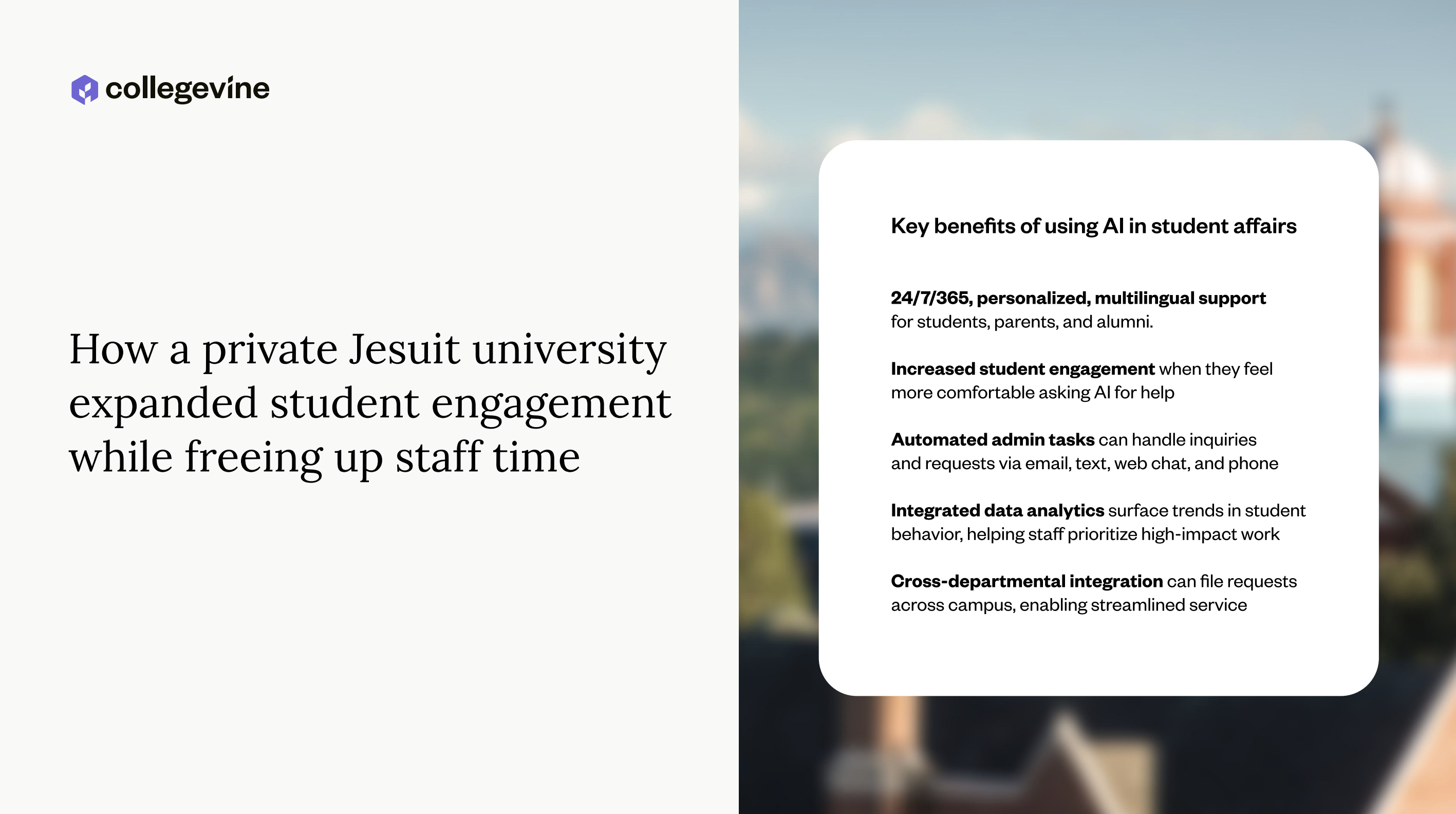
That same foundation gave Barry's AI one stop, Adrian, a new set of knowledge to work with. Adrian has been live for several months over email, SMS, phone, and webchat, and with the degree audit behind her she can name the credits standing between a student and on-time graduation and book the coaching appointment in the same conversation.
A roadmap that grows from the data layer
With the foundation in place, Barry has started rethinking its longer-term roadmap, with use cases like vendor spend optimization, course schedule optimization, retention risk modeling, and scholarship matching on the list. For Yvette Brown Koottungal, VP for Digital Transformation and CIO, the lesson underneath it all is that "an AI agent is only as good as the data underneath it."